
Why EV Two-Wheeler Brands Are Betting on Fixed Batteries Over Removable Ones
- 1 day ago
- 3 min read
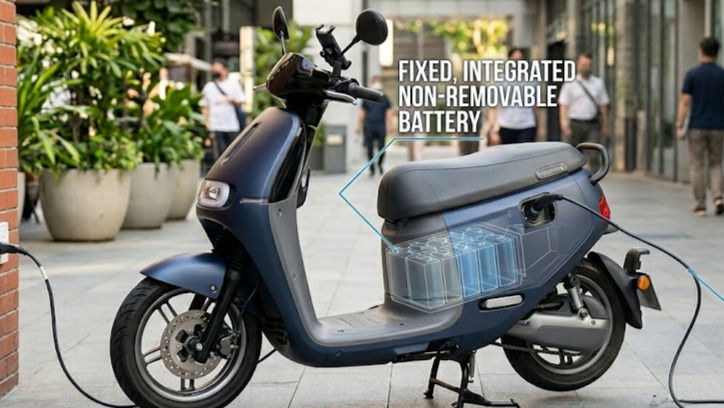
The electric two-wheeler market is at an inflection point. While early EV scooters and motorcycles often touted removable batteries as a selling point—promising the convenience of carrying a power pack upstairs to charge in your apartment—an increasing number of manufacturers are moving in the opposite direction. From premium electric motorcycles to everyday commuter scooters, brands are integrating larger, fixed battery packs deep into the vehicle's architecture.
This shift isn't happening by accident. It's a calculated engineering and business decision driven by several compelling factors.
1. Structural Integrity and Weight Distribution
One of the most significant advantages of a fixed battery is how it transforms the vehicle's chassis. When a battery is designed as a permanent, integrated component, it can serve as a "stressed member" of the frame, adding rigidity rather than compromising it.
Removable battery systems require large access panels, latching mechanisms, reinforced mounting plates, and additional structural support to accommodate frequent removal. These add weight, create potential failure points, and often result in frames that are "more wobbly" and less precise in their handling.
For performance-oriented brands, this trade-off is unacceptable. A fixed battery allows engineers to position mass exactly where they want it, improving center of gravity and stability.
2. Larger Capacity Without Compromise
Perhaps the most practical reason for the fixed battery trend is energy density. A fixed battery doesn't need to conform to human-carriable dimensions or quick-release ergonomics. This means manufacturers can pack in significantly more kilowatt-hours for the same—or even less—weight penalty.
For commuters, integrated batteries allow for sleeker designs without the bulky, visually disruptive battery compartments that removable systems require.
3. Durability and Weather Resistance
Fixed batteries are inherently better protected. Sealed within the vehicle's frame, they are shielded from weather exposure, road debris, and the physical shocks of daily riding. Removable batteries, by contrast, need exposed contact points and casings that can be vulnerable to water ingress, dust, and impact damage over time.
This protection extends to temperature management. Integrated battery packs can be designed with dedicated thermal management systems that are difficult to implement in removable modules, improving both safety and long-term battery health.
4. Reduced Complexity and Maintenance
Every removable battery system introduces moving parts—latches, locks, electrical connectors, and release mechanisms. Each of these is a potential point of failure. Forum discussions among early EV adopters highlight issues with rattling, ill-fitting battery compartments, and doors that require tape or straps to stay closed.
Fixed batteries eliminate this complexity. The electrical connection to the motor remains permanent and stable, which research suggests can improve overall range by up to 50% while delivering more consistent acceleration and speed. For manufacturers, fewer moving parts means lower warranty claims and simplified assembly.
5. Theft Deterrence
Battery theft remains a genuine concern in many markets. Removable batteries, even those with locking mechanisms, represent a valuable, easily targeted component. Fixed batteries are deeply embedded within the vehicle architecture, making them significantly harder to steal without stripping the entire vehicle. This is particularly relevant for fleet operators and urban commuters who park in public spaces.
6. Safety
A fixed, sealed battery enclosure allows manufacturers to engineer proper thermal management: heat carrier plates, forced air ducts, and sealed environments that keep moisture, dust, and debris out.
Removable batteries, by contrast, require seams, connector ports, and access doors that are potential entry points for water and contaminants. Every connection-disconnection cycle also introduces wear on pins and sockets, increasing resistance—and heat.
In a Springer-published structural assessment of two-wheeler battery enclosures, researchers emphasized that the enclosure must protect against mechanical and thermal abuse while maintaining airtight seals. Achieving this with a consumer-removable hatch is significantly harder than with a factory-sealed unit.


