-Photoroom(1.png)
5 Reasons the Pulsar NS200 is a Better Pick Than the Apache RTR 200
- Team ALLVOLTAUTO.com
- 2 days ago
- 3 min read

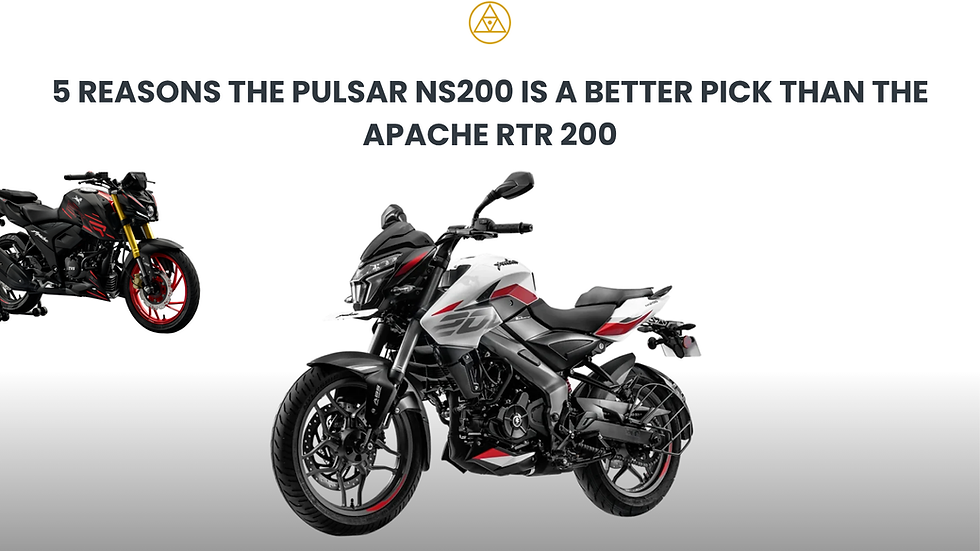
The 200cc naked streetfighter segment in India has long been a two-horse race dominated by two homegrown legends: the Bajaj Pulsar NS200 and the TVS Apache RTR 200 4V. Both motorcycles have carved out massive fan bases over the years, offering excellent performance, sharp styling, and great value.
While the Apache RTR 200 4V has heavily leaned into technology and track-focused agility with recent updates, the Pulsar NS200 remains a raw, unadulterated powerhouse. If you are torn between these two fantastic machines, here are five compelling reasons why the Bajaj Pulsar NS200 still holds a distinct edge over its TVS rival.
1. The 6-Speed Gearbox Advantage
Perhaps the most glaring difference between the two motorcycles is their transmission. The Pulsar NS200 boasts a 6-speed gearbox, whereas the Apache RTR 200 4V still makes do with a 5-speed unit.
If you plan on taking your bike on the highway, that 6th gear on the NS200 is an absolute lifesaver. It allows the engine to run stress-free at triple-digit speeds, returning better fuel efficiency and significantly reducing engine vibrations during long cruising stints. The Apache, while incredibly punchy in the city, tends to feel strained when you try to hold high speeds on the open highway because it runs out of gears.
2. Superior Power and Top-End Performance
When it comes to pure spec-sheet bragging rights and top-end rush, the NS200 takes the crown. Powered by a 199.5cc engine, the Pulsar churns out a highly impressive 24.5 PS of max power at 9750 rpm and 18.74 Nm of torque.
In contrast, the Apache RTR 200 4V produces a modest 20.82 PS and 17.25 Nm of torque (in Sport mode). While the Apache is tuned for excellent mid-range grunt and quick city overtakes, the NS200 has a manic top-end. Once you cross the 6,000 rpm mark, the NS200 pulls aggressively all the way to its redline, delivering a much more thrilling and sporty riding experience that performance enthusiasts crave.
3. Advanced Liquid-Cooling Technology
Heat management is crucial for performance motorcycles, especially during spirited riding or in bumper-to-bumper Indian traffic. The Pulsar NS200 utilizes a sophisticated liquid-cooling system.
The Apache RTR 200 4V, on the other hand, relies on an oil-cooled setup. While TVS's oil-cooling works perfectly fine for city commutes, liquid cooling is fundamentally superior at dissipating heat during sustained high-speed runs or aggressive track days. This keeps the NS200's engine performance consistent and prevents power loss due to overheating on long tours.
4. Perimeter Frame for High-Speed Stability
Under the skin, the two motorcycles employ very different chassis philosophies. The Apache uses a traditional split double-cradle frame, which contributes to its light-footed and flickable nature in tight city corners.
However, the Pulsar NS200 is built around a robust, pressed-steel Perimeter frame—a premium chassis style you typically find on larger, more expensive sports bikes. This perimeter frame is significantly stiffer, giving the NS200 rock-solid composure and stability at high speeds. When you hit a sweeping highway corner at 100 km/h, the NS200 feels planted and predictable, inspiring massive confidence.
5. Aggressive Streetfighter Proportions and Value
Despite the RTR 200 getting a lot of tech updates (like riding modes and a TFT dash), the NS200 has historically maintained a highly aggressive price-to-performance ratio, often undercutting the top-spec Apache in terms of starting price.
Beyond just the price, the NS200 offers a genuine "bigger bike" feel. It is taller, has a wider fuel tank, and features a more commanding riding posture compared to the relatively compact Apache. For taller riders or those who want their 200cc motorcycle to have maximum street presence, the muscular aesthetics of the NS200 are hard to beat.


